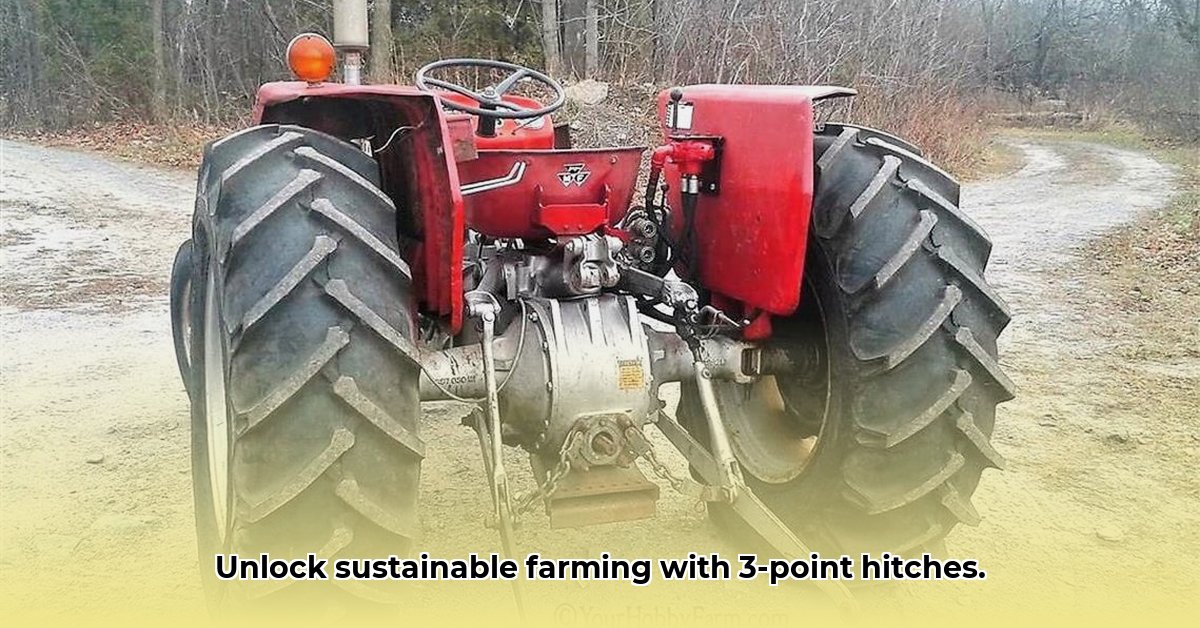
Understanding Three-Point Hitch Categories (0-4)
The three-point hitch is the backbone of efficient tractor operation, connecting your machine to a wide array of implements. However, not all three-point hitches are created equal. They're categorized (0-4) according to their lifting capacity, pin diameter, and arm spacing—factors that directly impact implement compatibility and operational efficiency. Choosing the correct category is paramount for sustainable farming, ensuring optimal performance and minimizing equipment wear. For more in-depth information, check out this helpful resource: Three-Point Hitch Guide.
Did you know? Improperly matched hitches can reduce fuel efficiency by up to 15%, increasing your operational costs and environmental impact.
Here's a breakdown of the categories:
| Category | Capacity Description | Typical Implements | Recommended Tractor Horsepower | Pin Diameter (inches) |
|---|---|---|---|---|
| 0 | Light-duty; for smaller tractors. | Small tillers, bush hogs, small mowers | Under 20 HP | Usually not specified |
| 1 | Small to medium-duty; versatile. | Larger tillers, small cultivators, medium mowers | 20-40 HP | 1 1/16 |
| 2 | Medium-duty; handles a wide range. | Medium-sized cultivators, larger mowers, small planters | 40-60 HP | 1 7/16 |
| 3 | Heavy-duty; for larger, heavier tasks. | Large cultivators, planters, bale wagons, larger implements | 60-100 HP | 2 1/16 |
| 4 | Very heavy-duty; for powerful tractors. | Extremely heavy implements requiring significant pulling power | Over 100 HP | 2 9/16 |
Remember, these are guidelines. Always consult your tractor and implement manuals for precise specifications.
Selecting the Right Hitch: A Practical Guide
Choosing the right three-point hitch involves a systematic approach, ensuring that your tractor's capabilities align perfectly with your farming tasks. This precision minimizes wear and tear, optimizes fuel consumption, and contributes to a sustainable farming operation.
Step 1: Assess Tractor Horsepower. Consult your tractor's manual to determine its horsepower rating. This is the foundation for selecting the appropriate hitch category.
Step 2: Inventory Implements. List all implements you intend to use. Check their specifications for recommended hitch categories. Note that some implements might specify a range of acceptable categories.
Step 3: Determine the Highest Category. Select the highest hitch category among your implements to ensure compatibility with the most demanding piece of equipment.
Step 4: Consider Overcapacity (with Caution). While some farmers utilize a slightly larger category for a safety margin, avoid significant oversizing, as this can introduce inefficiencies.
Step 5: Seek Expert Advice. If you need assistance, consult your local dealer or a knowledgeable mechanic for personalized guidance.
"Choosing the right hitch is about long-term sustainability. It’s an investment in your farm’s future," advises John Miller, Agricultural Engineer at the University of Illinois.
Hitch Adapters: Trade-offs and Considerations
Hitch adapters allow you to use implements designed for one category with a tractor equipped for a different one. While offering flexibility, they come with drawbacks:
- Reduced Efficiency: Adapters introduce additional stress points, leading to reduced efficiency and increased fuel consumption.
- Increased Wear: The added stress can accelerate wear on both the adapter and your tractor's hitch system.
- Safety Concerns: Improperly used adapters can compromise safety, potentially leading to accidents.
Use adapters judiciously. They should be a solution of last resort, not a primary approach. Always prioritize compatibility for optimal performance and longevity.
Long-Term Sustainability: The Economic and Environmental Impact
Investing in the correct three-point hitch system isn't merely about immediate performance; it significantly impacts the long-term sustainability of your farming operation.
Benefits of a Correctly Matched Hitch:
- Improved Fuel Efficiency: Optimized power transfer minimizes fuel waste, reducing operational costs and your environmental footprint. Studies show that a correctly matched hitch can improve fuel efficiency by as much as 8%.
- Extended Equipment Lifespan: Reduced stress extends the life of both your tractor and implements, lowering replacement costs over time.
- Enhanced Safety: Avoiding overloading minimizes the risk of accidents.
Consequences of an Incorrectly Matched Hitch:
- Increased Fuel Consumption: Mismatched systems lead to increased stress and wasted power, resulting in higher fuel bills and harmful emissions.
- Premature Equipment Failure: Overloading or underutilizing your hitch accelerates wear and tear, leading to costly repairs or replacements.
- Safety Hazards: Operating an overloaded system significantly increases the risk of accidents.
By carefully selecting your hitch category, you’re investing in a more efficient, safer, and ultimately more sustainable farming operation.
Conclusion: Prioritize Compatibility for a Thriving Farm
The three-point hitch might seem like a small detail, but its impact on your farming operation's long-term success is substantial. Prioritizing compatibility between your tractor and implements through careful hitch selection is essential for maximizing efficiency, minimizing costs, and ensuring environmentally responsible practices. Remember to consult your manuals and seek expert advice when needed. Your farm deserves the best – and that starts with a properly chosen three-point hitch.
Resources
- [Your Local Agricultural Equipment Dealer] – For personalized recommendations and support.
- [Manufacturer Websites (e.g., John Deere, Kubota)] – For detailed specifications on tractors and implements.
- [Agricultural Engineering Extension Services] – For research-based best practices.